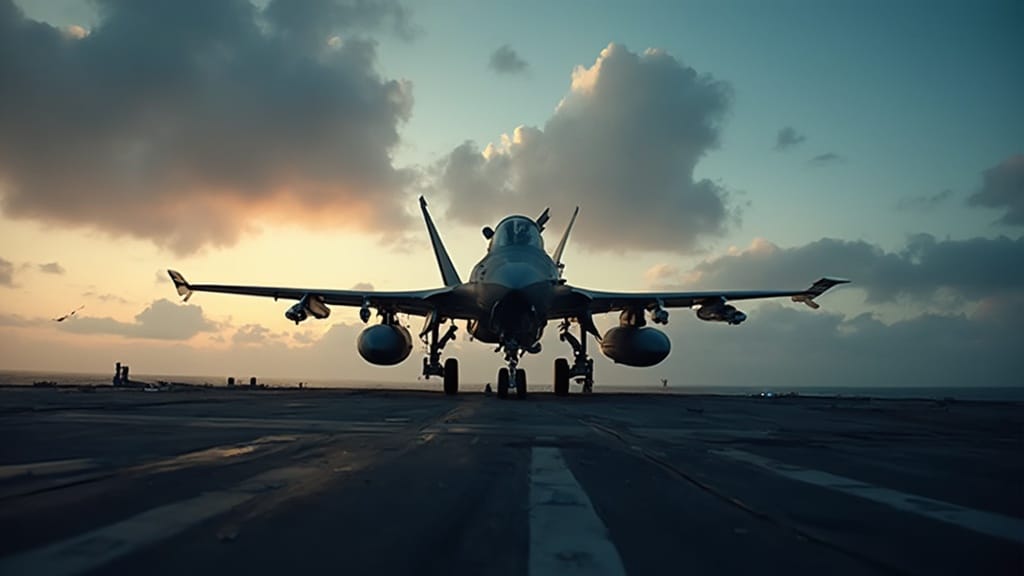
The Big Picture
The Iran conflict is in a legal gray zone — officially "terminated" on paper while a naval blockade turns back Iranian ships in real time — and the Strait of Hormuz remains strangled, with 97% of normal ship traffic gone and gas at $4.39 nationally. While Americans watch the pump, Congress quietly voted to hand the surveillance state another three years of warrantless access to your communications, and the FCC is finally moving to cut China out of the electronics certification racket that's been a national security blind spot for years. The threats are converging. The window to act is narrowing.
Today's Stories
TRUMP DECLARED THE IRAN WAR OVER. THE NAVY DIDN'T GET THE MEMO.
On Friday, May 1 — exactly 60 days after hostilities began on February 28 — President Trump sent letters to congressional leaders declaring the Iran conflict "terminated." The timing was surgical: the War Powers Resolution gives presidents 60 days to conduct military operations without congressional authorization. By declaring it over at the deadline, the White House argued the clock was moot. But the U.S. naval blockade is still turning back Iranian ships — 48 of them over the last 20 days, per CBS News. Iran submitted a 14-point counter-proposal through Pakistani mediators demanding sanctions relief, reparations, U.S. force withdrawal from its periphery, and a new mechanism governing Hormuz. Trump told reporters Saturday he was "waiting for the exact wording" of any deal — while warning he could restart strikes if Tehran "misbehaves." The war is in a quantum state: officially over, practically ongoing, one provocation from resuming. If the Senate forces a War Powers vote and loses, presidential war-making authority expands for a generation. If it wins, the blockade gets constrained. Either outcome reshapes American power projection.
CONGRESS JUST HANDED THE SURVEILLANCE STATE THREE MORE YEARS — WITH DEMOCRATIC HELP
The House voted 235-191 on April 30 to extend FISA Section 702 for three years, with 42 Democrats crossing the aisle to seal the deal. Section 702 lets the government surveil non-citizens abroad without a warrant — but Americans' communications get swept up constantly, and the FBI has historically searched that database without judicial oversight. Critics called it "a three-year blank check for surveillance abuse." Worse: the bill preserves what opponents call the "data broker loophole" — federal agencies can purchase your location data and browsing history from commercial companies with no warrant, no court order, and no oversight whatsoever. This is the surveillance architecture that was used against lawmakers, protesters, and campaign donors. It now heads to the Senate, where it needs 60 votes. The question isn't whether your government is watching you. It's whether your elected representatives will do anything about it — or whether they'll keep selling your privacy to the same intelligence apparatus that's been abusing it for years.
THE FCC IS FINALLY MOVING TO KICK CHINA OUT OF AMERICA'S ELECTRONICS SUPPLY CHAIN
This is the story that deserved front-page treatment and got buried. The FCC voted unanimously to advance a proposal banning all testing labs in China and Hong Kong from certifying electronics sold in the United States. The national security justification is obvious — and long overdue. Here's the scale of the problem: roughly 75% of U.S.-bound consumer electronics are currently tested in Chinese facilities. Every phone, laptop, and smart device American consumers buy has been cleared through labs operating under Beijing's jurisdiction. The FCC simultaneously voted to bar China Mobile, China Telecom, and China Unicom from operating U.S. data centers, and proposed restricting interconnections with carriers using Huawei or ZTE equipment. Yes, certification costs will rise — from roughly $400–$1,300 at Chinese labs to $3,000–$4,000 at U.S.-based facilities. That's the price of not letting the Chinese Communist Party gatekeep the hardware entering American homes and critical infrastructure. The proposal enters a 60-to-90-day public comment period before final rulemaking. This is what winning looks like. Don't let the lobbyists kill it.
HORMUZ ISN'T JUST AN OIL STORY ANYMORE — IT'S A FOOD SECURITY CRISIS IN SLOW MOTION
Everyone's watching crude prices. Fewer people are watching fertilizer. The UN Trade and Development agency reported this week that daily ship transits through the Strait of Hormuz have fallen approximately 97% from pre-conflict norms. Here's what that means beyond gasoline: roughly one-third of global seaborne fertilizer trade moves through that corridor. The Gulf accounts for 46% of global urea trade — urea being the most widely used nitrogen fertilizer on earth. If the closure extends through Southern Hemisphere planting season, this becomes a global food security crisis. The Dallas Fed projected that a sustained 20% supply removal from global oil markets would cut Q2 global growth by an annualized 2.9 percentage points. ING now sees Brent crude holding above $100 through year-end if Hormuz stays largely closed through May. Meanwhile, the UAE — Iran's fellow OPEC member that absorbed weeks of Iranian missile and drone attacks — officially exited OPEC on Friday after 59 years. Wood Mackenzie called it "the biggest schism in the organization since it was founded in 1960." The cartel that once set the price of everything now controls a noticeably smaller share of global supply.
IRAN-LINKED HACKERS ARE HOLDING AMERICA'S LINUX SECURITY INFRASTRUCTURE HOSTAGE
While the shooting war dominates headlines, Iran's cyber proxies are quietly attacking American digital infrastructure. A group calling itself the "Islamic Cyber Resistance in Iraq — 313 Team" — assessed by threat analysts as tied to Iran's Ministry of Intelligence and Security — has been conducting a sustained DDoS assault on Canonical, the organization behind Ubuntu Linux, for over a day. The attack disrupted the Ubuntu Security API, the endpoint that system administrators and automated patch tools use to pull vulnerability data. In plain terms: Iran's proxies took down the security notification system that tells American IT teams which vulnerabilities to fix. Then they sent Canonical an extortion message: contact us or the attacks continue. The group is reportedly using a DDoS-for-hire service allegedly capable of delivering over 3.5 terabits per second — the same service they claim to have used against eBay and other targets. This is the Iran threat that doesn't get discussed at the gas pump: a regime under military and economic pressure from the United States is actively attacking the digital infrastructure that keeps American systems patched and secure.
What to Watch
- [CONFIRMED] If the Senate accepts the White House's War Powers framing without forcing a vote, presidential authority to conduct military operations unilaterally expands with no legislative check — a precedent that outlasts this administration. (Confirmed: War Powers deadline passed Friday; Senate response pending)
- [ASSESSED] If the FCC's China lab ban survives the public comment period and reaches final rulemaking, expect consumer electronics prices to rise measurably in Q3 as manufacturers absorb tripling certification costs — but American supply chain security improves structurally. (Assessed: cost differential confirmed; manufacturer response is the variable)
- [ASSESSED] If the Hormuz closure extends through May and into Southern Hemisphere planting season, fertilizer supply disruptions translate into food price shocks that hit American grocery bills six to nine months later — long after the conflict headlines fade. (Assessed: UNCTAD data confirmed; agricultural impact lag is standard)
- [SPECULATIVE] If Iran's 313 Team escalates from DDoS extortion against Canonical to targeting Linux package repositories directly, a nation-state adversary gains the ability to inject malicious code into software updates running on American government and critical infrastructure systems. (Speculative: attack vector identified by analysts; escalation not yet observed)
The Closer
The Iran conflict is simultaneously declared over and actively ongoing, China is being slowly cut out of America's electronics supply chain, and an Iran-linked cyber unit is holding Linux security infrastructure hostage while everyone watches the gas pump. This is what a multi-domain war against American sovereignty looks like — fought in the Strait of Hormuz, in House floor votes, in FCC rulemaking, and in the Ubuntu Security API. The Americans who understand all four theaters are the ones this publication exists for.
Patriot Wire — America's intelligence briefing. Unfiltered.